
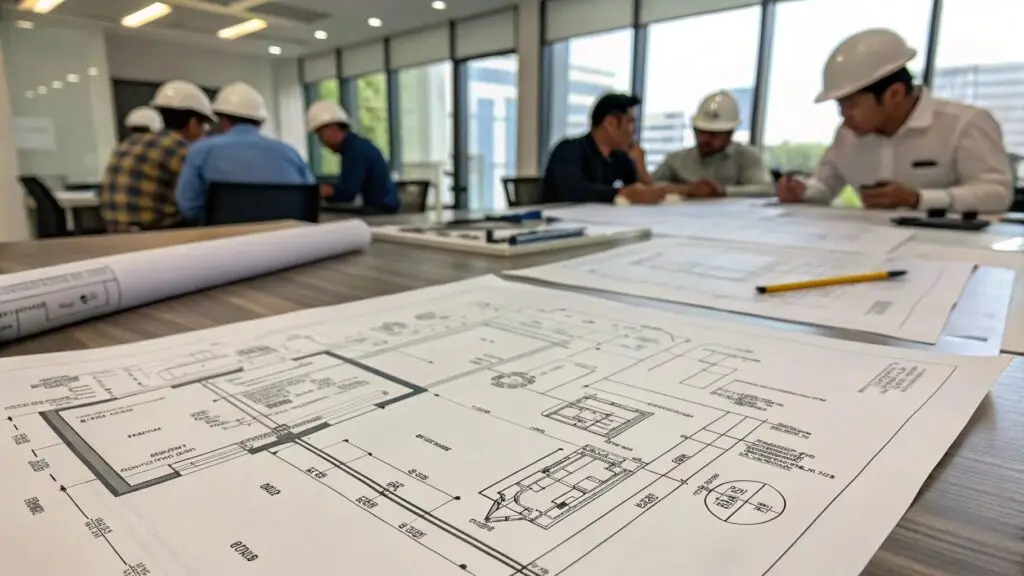
In any construction project, design intent alone is not enough to execute work correctly on site. Teams need clear, coordinated, and buildable drawings that translate design into installation-ready information. That is exactly where MEP Shop Drawings become essential.
Whether the project is a commercial tower, hospital, industrial unit, hotel, or residential development, Shop Drawings help contractors, consultants, fabricators, and site teams understand how mechanical, electrical, plumbing, and fire protection systems will actually be installed. They reduce confusion, support coordination, and help avoid costly rework during construction.
Today, with the growing use of MEPF Services and digital workflows, these drawings are no longer just drafted documents. They are a critical part of project delivery, especially when developed through BIM Services in India, where detail, coordination, and approval tracking are becoming more important across modern projects.
What Are MEP Shop Drawings?
MEP Shop Drawings are detailed technical drawings prepared for the installation of mechanical, electrical, plumbing, and firefighting systems in a building. Unlike design drawings, which mainly communicate the engineer’s design concept, shop drawings focus on execution. They show exact dimensions, routing, levels, clearances, sleeve locations, supports, equipment positions, and coordination requirements.
Design drawings tell you what needs to be provided, while shop drawings tell you how it will be installed.
These drawings are usually prepared after reviewing the design documents, architectural layouts, structural drawings, and project specifications. They are then coordinated across trades to ensure that ducts, pipes, cable trays, conduits, and equipment can fit properly within the available space.
Why MEP Shop Drawings Matter in Construction
A site team cannot rely only on schematic or tender drawings when multiple services are running above ceilings, inside shafts, and through plant rooms. MEP systems often compete for the same physical space. Without proper coordination, clashes become unavoidable.
Well-prepared Shop Drawings help in:
- improving installation accuracy
- reducing clashes between MEP and structural or architectural elements
- supporting consultant review and approval
- helping fabrication and prefabrication teams
- reducing wastage of materials and labour
- maintaining project timelines and site productivity
For contractors and consultants, these drawings act as a bridge between engineering design and actual execution.
What Do MEP Shop Drawings Include?
The content of MEP shop drawings can vary from project to project, but a complete set generally includes the following details.
1. Mechanical Drawings
Mechanical shop drawings cover HVAC systems and related equipment. These drawings typically include duct routing, duct sizes, insulation thickness, diffusers, grilles, dampers, equipment locations, access clearances, support details, and connection points. Chilled water piping, condenser water lines, refrigerant piping, and drainage connections may also be shown depending on the system.
2. Electrical Drawings
Electrical shop drawings show cable tray routing, conduit layout, trunking, panel board locations, lighting layouts, small power points, circuit references, riser details, grounding systems, and containment coordination. In many projects, these drawings also include section details and routing logic in congested areas.
3. Plumbing Drawings
Plumbing shop drawings include water supply piping, drainage piping, vent lines, sleeves, floor drain locations, pump connections, pipe slopes, cleanouts, and fixture connection details. These drawings are especially important because plumbing systems need careful coordination with structure and architectural finishes.
4. Fire Fighting Drawings
Fire protection shop drawings show sprinkler pipe layouts, sprinkler head locations, branch lines, mains, valves, fire hose cabinet locations, pump room details, and coordination with reflected ceiling plans. Coverage, spacing, and coordination with HVAC and lighting are also critical in these drawings.
5. Builders’ Work Drawings
These show openings, sleeves, inserts, blockouts, and penetrations required in structural and architectural elements for MEP installations. This step is important because once civil work progresses, missed sleeves and openings can create major site issues.
6. Sections and Detailed Views
A proper set of shop drawings includes enlarged views, sectional details, shaft layouts, plant room coordination drawings, toilet detail drawings, and ceiling coordination views. These details help the site team understand congested zones more clearly.
7. Equipment and Material References
Shop drawings often identify equipment tags, reference schedules, and major component details so that every installation can be matched with approved material submittals and project specifications.
How Shop Drawings Differ from As-Built Drawings
Shop Drawings are prepared before installation. They are planned and coordinated drawings used for approval and execution.
An As-built drawing is prepared after installation or during project completion. It reflects what was actually installed on site, including changes made during construction. If routes, dimensions, or equipment positions differ from approved shop drawings, the as-built set captures those final conditions.
How the MEP Shop Drawing Approval Process Works
The approval process is one of the most important parts of MEP coordination. Even a highly detailed drawing is not useful until it has been reviewed and approved by the relevant stakeholders.
Step 1: Review of Design Inputs
The drafting or BIM team collects all required project documents. This includes architectural drawings, structural drawings, tender drawings, MEP design drawings, specifications, client requirements, and approved material submittals.
Before drawing production begins, the team studies ceiling heights, shaft sizes, beam depths, equipment requirements, and service zones.
Step 2: Preparation of Coordinated Drawings
Based on the design inputs, the team develops coordinated MEP shop drawings. At this stage, clashes are checked between mechanical, electrical, plumbing, fire protection, and structural elements.
This is where digital coordination plays a major role. Companies using BIM Services in India often prepare these drawings through 3D models, which makes clash identification faster and more accurate than traditional 2D drafting.
Step 3: Internal QA and Technical Check
Before submission, the contractor or BIM team performs an internal review. This step checks:
- system routing accuracy
- dimensions and levels
- compliance with project standards
- section completeness
- constructability
- consistency with approved materials
- clash-free coordination
This internal review is critical because poor-quality submissions delay the project and increase rejection rates.
Step 4: Submission to Consultant or Main Contractor
Once reviewed internally, the shop drawings are formally submitted for consultant approval. Depending on the project structure, the drawings may first be reviewed by the main contractor, design manager, or coordination team before reaching the MEP consultant.
Step 5: Consultant Review and Comments
The consultant reviews the drawings for design compliance, spatial coordination, code alignment, and installation logic. They may return comments such as:
- revise routing
- maintain required clearance
- Update section details
- coordinate with architectural ceiling
- change pipe level
- Confirm access for maintenance
- match equipment data with approved submittal
This stage may involve multiple review cycles depending on the complexity of the project.
Step 6: Revision and Resubmission
The contractor or BIM team incorporates comments and resubmits the revised drawings. Proper comment closure is important here. Every revision should clearly respond to the consultant’s observations rather than making random updates.
Step 7: Final Approval for Construction
Once all comments are addressed, the drawings are marked approved or approved with minor comments. Only after this stage should the installation proceed on-site.
In professional project environments, approved shop drawings become the official reference for execution.
How BIM Improves the Shop Drawing Process
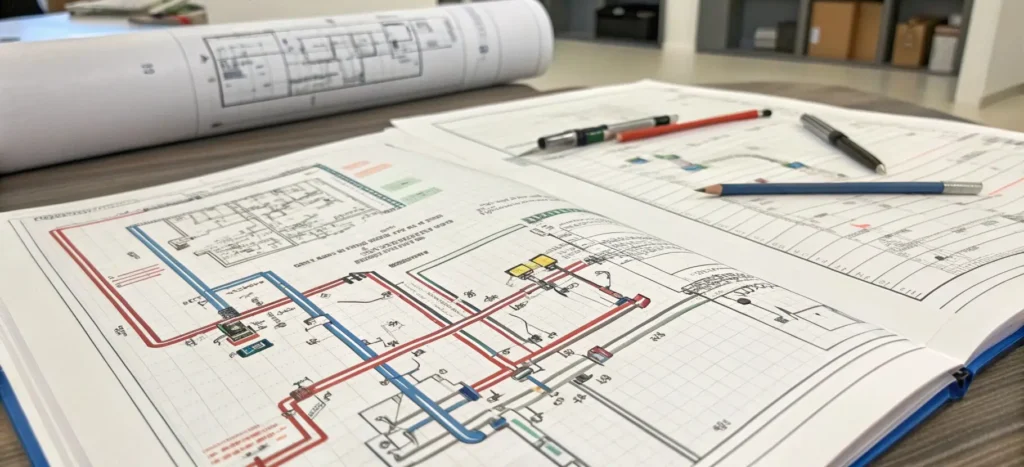
Traditional drafting can still produce shop drawings, but BIM-based workflows offer a stronger advantage, especially on large or coordination-heavy projects.
Using MEPF Services supported by BIM helps teams:
- Create coordinated 3D models before drawing extraction
- detect clashes early
- generate cleaner sections and detailed views
- improve approval speed
- reduce site conflicts
- support quantity take-offs and prefabrication
- maintain better revision control
This is one reason demand for BIM Services in India has grown across commercial, healthcare, hospitality, data centre, and industrial construction projects. Contractors want fewer surprises on site, and BIM-backed shop drawings support that goal.
Common Reasons Why Shop Drawings Get Rejected
Even experienced teams face drawing rejections when basic issues are overlooked. Some common reasons include:
- missing dimensions or levels
- poor coordination between trades
- mismatch with design intent
- incorrect equipment references
- lack of sections in congested areas
- inadequate access and maintenance clearance
- Failure to reflect approved material submittals
- incomplete revision response
Best Practices for Better MEP Shop Drawings
To get better results from your shop drawing workflow, focus on these practical points:
- Start coordination early, not after site work begins
- work from the latest architectural and structural backgrounds
- involve all disciplines in coordination reviews
- Use BIM where the project complexity demands it
- check constructability, not just drafting accuracy
- maintain revision control and document tracking
- keep alignment between shop drawings and future As-built drawing updates
Final Thoughts
MEP shop drawings are far more than technical paperwork. They are a core execution tool that helps turn design into reality with fewer errors, better coordination, and clearer communication across project teams.
A well-developed set of Shop Drawings gives contractors confidence on site, helps consultants review installation logic properly, and supports smoother project delivery from coordination to completion. When backed by expert MEPF Services and modern BIM Services in India, the process becomes more accurate, faster, and more reliable.
FAQs
What is included in MEP shop drawings?
MEP shop drawings usually include mechanical, electrical, plumbing, and fire protection layouts with dimensions, levels, routing, equipment locations, sections, sleeve details, and coordination views required for actual installation.
Who prepares MEP shop drawings?
These drawings are typically prepared by specialist drafting teams, MEP contractors, or BIM professionals working under the contractor or subcontractor.
Are shop drawings the same as as-built drawings?
No. Shop drawings are prepared before installation for execution and approval, while an As-built drawing shows the final installed condition after the work is completed.
Why is approval important for shop drawings?
Approval ensures that the drawings meet project specifications, design intent, coordination requirements, and consultant expectations before work begins on site.
How does BIM help in shop drawing preparation?
BIM improves coordination by creating a 3D environment where clashes, clearances, and routing issues can be checked before generating final drawings.